 University News
23 September 2026
Announcement for new 2026 baccalaureate holders to benefit from the English-language MOOC
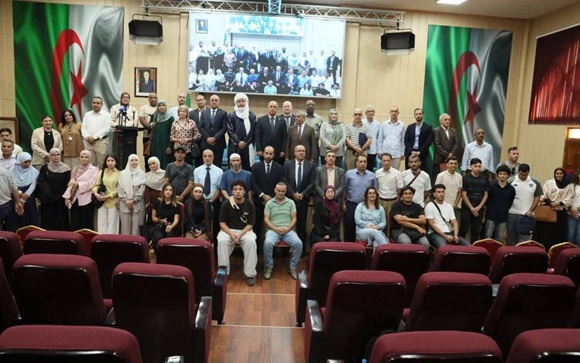
The University of Continuing Education (UFC) today, Saturday, September 26, 2026, launched the fourth edition of Digital Week, taking place from September 26 to October 3, 2026, under the theme: “Towards an Empowerment University… A Smart Digital Vision.” The event is being held with the participation of the University’s various centers across the country, as part of its ongoing efforts to advance digital transformation and develop a smart and civic university model. The opening ceremony of Digital Week was held at the headquarters of the Presidency of the University of Continuing Education, Didouche Mourad, in the presence of Mr. Anrab Sidi, Chair of the Committee on Education, Higher Education, Vocational Training and Religious Affairs of the People’s National Assembly; Members of the Council of the Nation, Mr. Ammar Ben Abid and Mr. Farid Djemani; the Vice-President of the People’s Provincial Assembly of Algiers; representatives of public and security authorities; university executives; faculty members; students; as well as guests and participants. The opening ceremony was also followed remotely from the University’s various centers, reflecting the national scope of this scientific and digital event. The opening ceremony began with the recitation of verses from the Holy Quran, followed by the national anthem and a minute of silence in tribute to the victims of the wildfires that affected Algeria in August 2026. In his opening address, the Director of the University of Continuing Education, Professor Yahia Djaafri, emphasized that the University has become an essential space for shaping the future through its ability to generate solutions and address the challenges and constraints arising from the rapid transformations taking place across various fields. He stressed the importance of entrepreneurship, innovation and digital transformation in building a university capable of responding to the requirements of the near future. The Director of the University also addressed the transformations brought about by the knowledge society to the education sector, noting that while the fundamental mission of education has remained unchanged, its means, tools and methods have undergone profound transformations, particularly in light of the rapid development of modern technologies and artificial intelligence. He explained that digital education is based on three fundamental pillars: digital infrastructure; educational platforms and interactive systems; and digital and interactive educational content. He noted that the University of Continuing Education relies on these various tools and platforms to provide public higher education services to students and different segments of society. He also highlighted the importance of distance education in removing temporal and geographical barriers and enabling broad segments of society to pursue their studies and training, including students combining work and study, women, people whose circumstances have prevented them from attending in-person education, as well as those wishing to return to university after a period of interruption. In this context, Professor Yahia Djaafri underscored the distinctive role of the University of Continuing Education as a university that reaches citizens wherever they are through its educational platforms and digital tools. He emphasized that a civic university is not limited to providing education, but also engages with its surrounding community and contributes to serving society. As part of this civic dimension, the University launched a national blood donation campaign in conjunction with Digital Week, in coordination with the National Blood Agency. The campaign involves the University’s various centers across the country and constitutes a humanitarian and solidarity initiative aimed at contributing to blood-stock supplies and promoting a culture of blood donation and solidarity within the university community and society at large. During the opening ceremony, the Director General of the National Blood Agency, Dr. Houria Touafdit, delivered a speech highlighting the importance of the national blood donation campaign and the University’s role in promoting a culture of solidarity and citizenship and contributing to serving society. The opening program also featured a video presentation dedicated to Digital Week, documenting the University of Continuing Education’s digital transformation journey and the development of its digital platforms and services. The presentation also highlighted various aspects of digital university life and the services provided by the University to its students and staff. The event also featured a series of scientific presentations and lectures addressing themes related to the digital university, citizenship, digital transformation, pedagogy and innovation. In this context, Professor Abdelmadjid Kadi delivered a presentation entitled “The Civic University in the Digital Age,” addressing the relationship between digital transformation and the role of the university in promoting the values of citizenship and strengthening the university’s engagement with society. Professor Saidi Naaman, in his presentation entitled “Assessment Engineering in the Context of Digital Pedagogy,” addressed the transformations taking place in assessment within the digital learning environment and the importance of developing assessment mechanisms and methods in line with the nature and requirements of digital education. Professor Souad Boulahia, Vice-Rector of the University in charge of Pedagogy and Studies, also delivered a presentation entitled “University of Continuing Education… A Journey of Development,” in which she reviewed the University’s development and the transformations it has undergone in the fields of education and training, in line with the new requirements of the digital university. The program continued with a presentation by Professor Zine Eddine Sefad, Director of the Artificial Intelligence House at the University of Continuing Education, entitled “University 4.0… Towards a Smart and Innovative University.” He addressed the prospects for leveraging artificial intelligence and modern technologies to develop the University, foster innovation, and improve services and the educational experience. These presentations, together with the various activities on the program, reaffirm the University of Continuing Education’s commitment to building a university model based on digital transformation, innovation, citizenship and openness to society, while making technology a means of enhancing the quality of education, improving university services and expanding access to knowledge. Digital Week will continue through October 3, 2026, with activities taking place across the University of Continuing Education’s various centers nationwide through a range of scientific, awareness-raising and digital programs and activities. The event thus serves as a national platform for exchanging expertise and ideas on the future of the university in the context of digital transformation. The fourth edition of Digital Week represents another milestone in the University of Continuing Education’s efforts to advance its vision of a smart, innovative and civic university capable of keeping pace with technological developments and responding to the needs of society, while strengthening its role in disseminating knowledge and promoting a culture of solidarity and citizenship.
University News University News
 Announcements